
Planning confined space entry?

Ensure certified rescue support is in place before work begins.
Why Confined Space Rescue Support Matters
Confined space entry requires immediate rescue capability. Delays in response increase risk and liability. We provide certified confined space rescue and standby support on-site — helping you meet Ontario regulatory requirements and keep work moving safely.
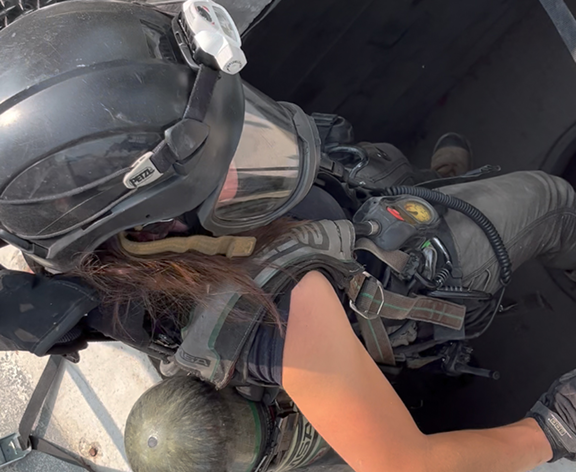
How We Can Help
COMPREHENSIVE PROGRAM DEVELOPMENT
When you need confined space entry procedures, risk assessments, and rescue plans developed, our specialists create customized programs that meet regulatory requirements and protect your workers.
EXPERT RESCUE STANDBY SERVICES
When your workers need to enter confined spaces and you need immediate rescue capability on-site, our certified rescue teams provide professional standby services with all necessary equipment and expertise.
TRAINING AND CERTIFICATION
When your team needs proper confined space training and ongoing competency maintenance, we deliver practical, hands-on training that prepares your workers for real-world scenarios.
We’re Proud to Support Hundreds of Businesses Across Ontario Such as:








Trust Us to Protect Your Team in Every Industry
Our rescue teams bring specialized equipment, immediate response capability,
and industry-specific expertise to high-risk environments across multiple sectors:
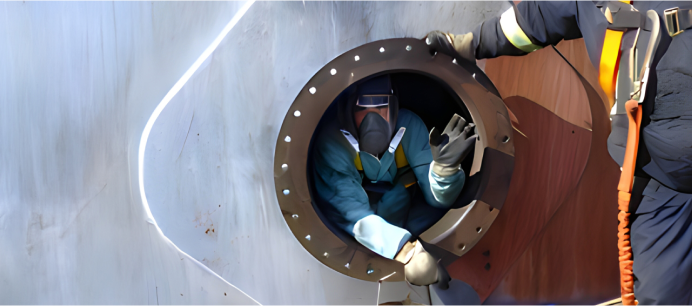
INDUSTRIAL MAINTENANCE
Tanks, vessels, and equipment repairs where atmospheric hazards and limited access create life-threatening conditions.
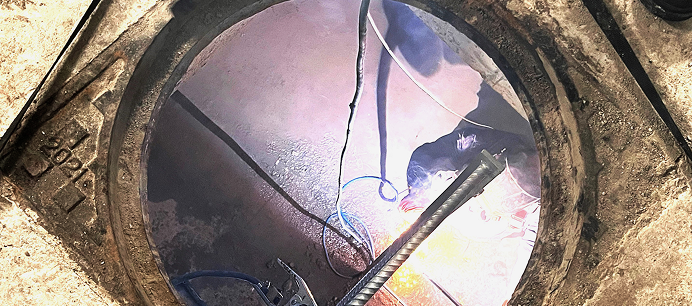
NEW BUILDING CONSTRUCTION
Construction sites where evolving work creates unexpected confined spaces requiring immediate rescue capability.
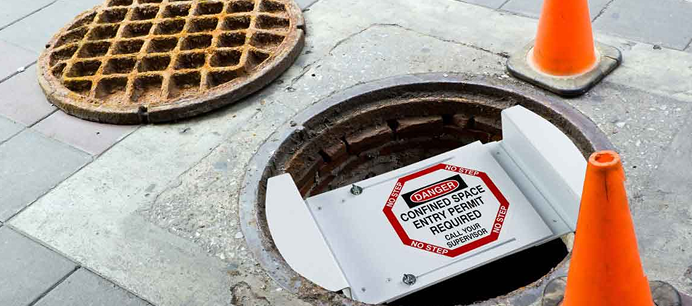
MUNICIPAL ASSET INSPECTIONS
Clarifiers, tanks, silos, manholes, and aeration chambers where city workers face complex atmospheric and physical hazards.
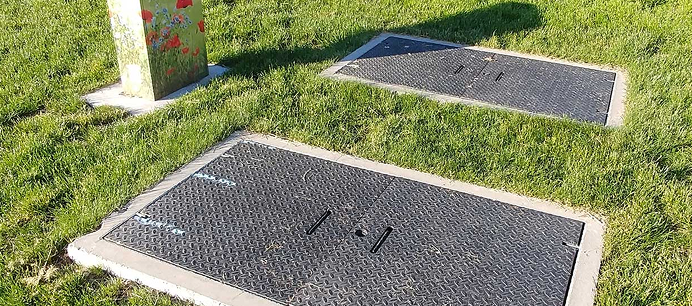
HYDRO VAULT MAINTENANCE
Utility environments where electrical hazards combine with confined space risks to create extremely dangerous working conditions.
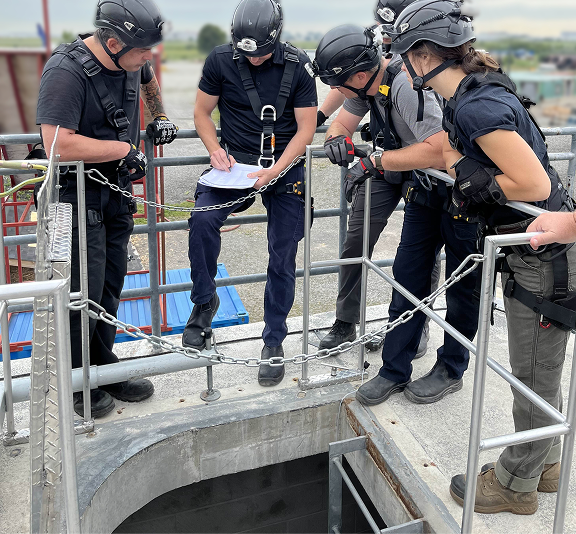
Seamless Integration with Your Operations
Our expert rescue teams integrate seamlessly with your operations to ensure safety before, during, and after confined space entry.
We assess hazards, develop entry procedures, provide trained attendants as required by law, and maintain fully equipped standby rescue teams. Our scalable services bring all necessary equipment including atmospheric monitoring, ventilation, and emergency response gear.
With us on-site, you eliminate delays, reduce liability, and ensure your workers have professional rescue capability when they need it most.
Servicing The Province Of Ontario
Our workforce is capable of servicing projects across the province, including GTA, Southwestern Ontario, Barrie, Ottawa, Thunder Bay, Windsor and more. Our team has the depth required to service the most remote regions of Ontario while providing consistent uninterrupted services. No matter where your project is, our team of certified rescue professionals is ready to protect your workers.
HOW IT WORKS





Frequently Asked Questions About Confined Space Regulations in Ontario
What is the legal definition of a confined space in Ontario?
A confined space in Ontario is defined under Ontario Regulation 632/05 of the Occupational Health and Safety Act (OHSA). It refers to a fully or partially enclosed space that is not designed for continuous human occupancy and where atmospheric hazards may arise due to its construction, location, contents, or the work being performed within it.
Is a permit required for confined space entry in Ontario?
Yes. Every confined space entry in Ontario requires an entry permit. The permit must identify the location of the confined space, describe the work to be performed, list the hazards and control measures, specify the duration of entry, name the entry workers and attendants, include atmospheric testing results, and outline the entry and rescue equipment to be used.
What are the requirements for safe confined space entry?
Before entering a confined space, employers must establish a written confined space program that:
- Identifies all confined spaces to which the program applies.
- Includes methods to:
- Assess hazards associated with each confined space.
- Develop one or more safe entry plans.
- Train workers who will interact with the space.
- Implements an entry permit system that specifies the measures and procedures to be followed during work in the confined space.
- Is developed in consultation with:
- The Joint Health and Safety Committee (JHSC) or Health and Safety Representative.
- If the work is part of a construction project: The employer must provide a copy of the program to the constructor, who shall then provide a copy to the project’s JHSC or Health and Safety Representative.
How many people are required for confined space entry?
In Ontario, confined space entry requires more than just the workers entering the space. An attendant must remain stationed outside the confined space at all times to monitor conditions and maintain communication with entrants. Additionally, a trained rescue team must be immediately available on-site and prepared to respond without delay. The number of attendants and rescue personnel must be sufficient to address the hazards identified for that specific confined space and the scope of work being performed. These staffing requirements, including roles and responsibilities, must be documented in the written confined space entry plan.
What are the responsibilities of a confined space attendant?
The attendant must remain outside and near the confined space at all times, maintain communication with entrants, monitor the safety of the workers within the space, and initiate emergency rescue procedures if needed.
What should an effective confined space rescue plan include?
A confined space rescue plan in Ontario must be ready for immediate implementation and include an adequate number of trained personnel who are on-site and prepared to respond. The plan should identify potential hazards, outline detailed rescue procedures, designate trained rescue personnel, and specify the equipment required for safe rescue operations. It must also establish communication methods and incorporate first aid and medical response protocols. Calling 911 alone does not meet Ontario’s confined space rescue requirements.
What are common confined space hazards?
Common confined space hazards include atmospheric dangers such as toxic gases, oxygen deficiency or enrichment, and flammable or explosive gases, vapours, fumes, dust, or mists. Other hazards may involve engulfment, entrapment, mechanical risks, and extreme temperatures. Effective control measures typically include ventilation or purging, isolation of energy sources, atmospheric testing, use of appropriate personal protective equipment (PPE), and adherence to proper entry and egress procedures.
Safety Is At Our Core
At SafetyCo, safety isn’t just what we do, it’s who we are. Our fast-growing team brings decades of hands-on experience across the entire safety spectrum, from officer placement and training to inspections and consulting. We make complex safety solutions simple, effective, and tailored to your workplace.
YEARS OF EXCELLENCE
With over 30 years of industry excellence, we specialize in providing expert construction safety officer solutions.
TRUSTED SOURCE
We have successfully placed over 250+ safety officers on large-scale construction projects, ensuring top-tier safety management.
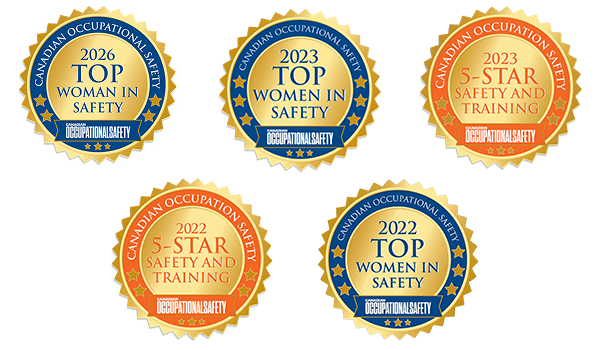
AWARD-WINNING SERVICES
Over the last few years, our collective team has proudly received a total of 8 different top safety awards across the SafetyCo portfolio.
Book a Free Discovery Call With Our Experts
Ensure your team’s safety with expert confined space rescue services tailored to your needs. Our experienced professionals are ready to support you before, during, and after entry. Contact us today to discuss your requirements and get the right team and equipment in place. We’re here to protect your team every step of the way.